Wednesday, September 27, 2006

Reaching the Next Generation

In last Sunday's sermon I mentioned the most recent research report from the Barna Group titled, "Most Twentysomethings Put Christianity on the Shelf Following Spiritually Active Teen Years" (read the report). The study notes that although 81% of today’s twentysomethings were involved in churches as teenagers, only 20% of them are still spiritually active at age 29. Of course, what the report is unable to tell us is how many of these were ever actually converted.

Although the report does not connect the dots, it is, in fact, an indictment of the way that most modern churches have attempted to minister to teens, namely by putting them exclusively into age segregated groups that focus on entertainment rather than discipleship. The problem with this approach is that when children become older they find the world’s entertainment more appealing than the pizza blast down at the church fellowship hall.

I think these statistics also speak to the gap between youth and their families. Parents have the primary responsibility of discipling their children. They cannot farm off that task to anyone else, even the church. Children will most likely follow their parents’ example. If parents see the Christian life as a draining burden and obligation, rather than as a joy and privilege, then so will their children.

The conventional wisdom is that if it is not broken, then don’t try to fix it. These statistics, however, tell us that youth ministry in our churches is largely broken. How do we fix it? Here are some things we have done at JPBC and will continue to do:

1. Try to integrate young people into the life of the church as a whole rather than constantly segregating them into their own same-age groups. This quarter in Sunday School, for example, we have asked our 9-12th grade youth to join their parents in one of the adult tracks. This does not mean that it is always wrong to have young people of the same age get together for fellowship. That is why we have continued our Sunday evening youth gathering, and we will likely offer special Sunday School tracks especially for teens in upcoming quarters.

2. Equip fathers and mothers to offer spiritual guidance and oversight in the home. A Christian Dad and Mom who are not self-righteous but who are humbly striving to live a faithful Christian life are the best "youth ministers" a child will ever have. If we disciple the parents, we are discipling the children.

3. Get the focus of our ministry to young people away from entertainment and on to gospel ministry (evangelism, discipleship, spiritual disciplines, Bible study, and worship). This does not mean that we eliminate all "fun" events, but we do not make them the central focus of our ministry.

May God give us a heart for reaching this generation of twentysomethings and teenagers with the gospel!

Grace and peace, Pastor Jeff Riddle

In Memoriam: Edgar Brown (1922-2006)


Ed Brown went to his reward with the Father on Monday, September 25, 2006. Ed was raised in an orphanage in New Jersey after the untimely death of his parents. As a young man, he fought in an infantry unit at the Battle of the Bulge in WWII. Few of us at JPBC will soon forget the powerful testimony he shared on the Sunday of Memorial Day Weekend 2006 of God’s providential care for him during his military service. After a successful career in insurance in Manhattan, New York, he retired to Palmyra, Virginia, along with the love of his life and his wife of over 60 years, Evelyn. Ed often relayed how he was converted by reading a Moffett translation of the Bible while riding a commuter train to work in New York City. His negative experiences in a liberal, mainline Methodist Church as a new Christian gave him a passion for evangelical and orthodox truth and led him to become a devoted Southern Baptist. He was a voracious reader and self-studied, lay theologian.

Though we are, of course, extremely sad to hear of Ed’s death, there are certainly many things about the circumstances for which we can be thankful. First, Ed died rather suddenly of cardiac arrest. There was no lingering suffering or long stay in a hospital or nursing home. Second, Ed and Evelyn had only recently moved into a retirement home in Decatur, Illinois, to be close to one of their daughters. It now seems apparent that God was working in those circumstances. Third, we all had our chance to speak with Ed and wish him farewell during the reception in his and Evelyn’s honor just before they moved. Many of us had the opportunity to say things to Ed about his influence in our lives in the Fellowship Hall that day. Like a contemporary Tom Sawyer, he got to hear the things we might have said at a funeral or memorial service.

A funeral service will be held at the First Christian Church of Decatur, Illinois (the home church of their daughter Beverly) at eleven o’clock on Friday.

Having kept the faith, our friend Ed has now finished his course and received the crown of life. Soli Deo Gloria!

Wednesday, September 20, 2006

Disturbing article on boy who wanted to blow up local school

Today's Charlottesville paper has a disturbing article about one of the local school kids who was arrested after planning a Columbine-style attack on his school. Much of the article focuses on info the child shared on his myspace account.
He chose as his screen name "Loki420diefor" and the article notes:
In the chats, the former Western Albemarle student used the screen name, “Loki420diefor,” calling to mind the character in Norse mythology known for mischief, and his birthday (April 20), which is also the day of the shootings at Columbine High School. (The number 420 is also commonly associated with marijuana use.)
Among other things, the article notes his myspace info "reveals his anger, his disdain for 'trendy Christians,' his enjoyment of Goth music and marijuana and his interest in suicide."
Again, the article should send chills down our spine when we think about this boy's deep disdain for his fellow man (and his antipathy toward believers in particular). It should also give us deep pause before sending our children off into classrooms with other children who have this kind of nihilistic worldview.

JTR

Monday, September 18, 2006

10% of SBC Pastors are 5-Point Calvinists?


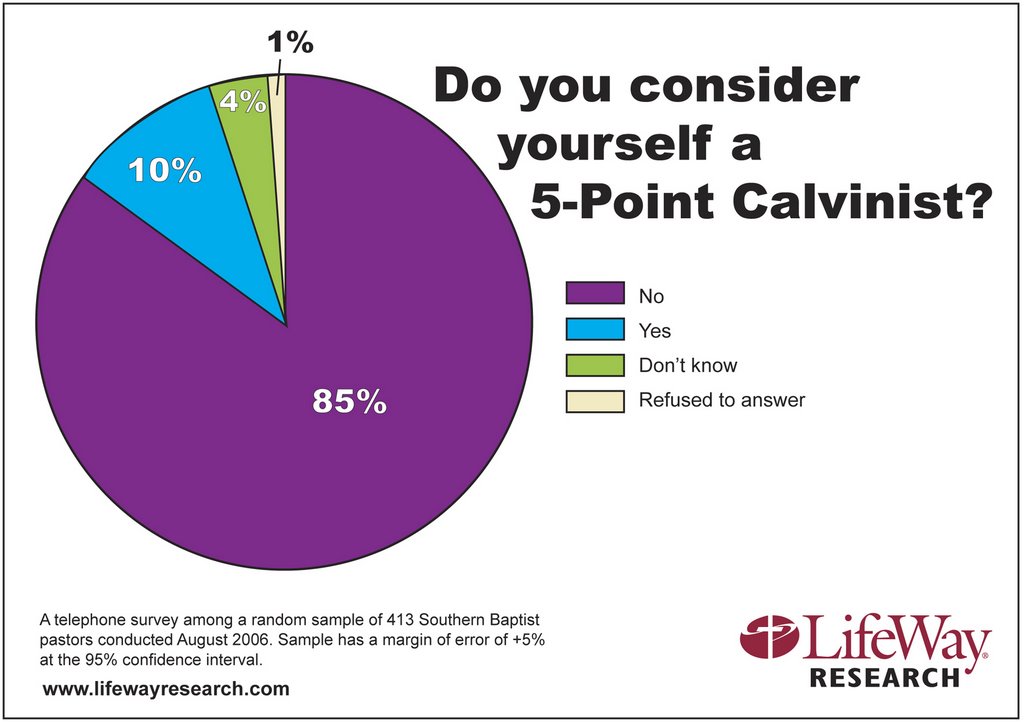
According to the first report from Brad Waggoner, the new leader of SBC's Lifeway Research, 10% of SBC Pastors are 5-point Calvinists. See the BP article. The study was based on a sample of just 413 pastors (I can just hear someone now saying they made calls from the Founders' phone contact list). From my anecdotal experience that does seem a bit high. But who knows? In another surprising find, the study also says that Calvinistic SBC pastors are not just young but come from all ages.

JTR

The Baptism of Pocahontas


A few years ago my family took a trip down to Jamestown and I noticed a print of the "Baptism of Pocahontas" by John Gadsby Chapman (1808-1889). Chapman's work was commissioned in 1837 and in 1840 it was placed in the United States Capitol Rotunda. It depicts the baptism of the Indian princess by the Anglican minister Alexander Whiteaker in Jamestown sometime around 1613-14. Note the disapproving posture of her brother, Nantequaus. See also the Capitol website article on the picture. Take note of other pieces of politically incorrect Capitol artwork like Robert W. Weir's "The Embarkation of the Pilgrims."
I was struck by the work for several reasons. First, it is a reminder that one of the goals of the colonization of America in the 17th-18th centuries was the evangelization of the new world. See Iain Murray's "The Puritan Hope" and his discussion of the work of John Elliot (1604-1690) among the Algonquin tribe of Massachusetts (pp. 93-95). Second, it speaks to the early 19th century American view of the relationship between church and state. Can you imagine such a scene being commissioned for inclusion in any federal building in 2006? A framed copy of the print now hangs in my office.

Saturday, September 16, 2006

The Folly of Sports Ministries

I ran across this radio program message the other day on sermonaudio.com. It raises some great questions about the idolatry of sport in our culture and how evangelicals sometime naively play into this. It's worth a listen.

JTR

Monday, September 11, 2006

Baptist and Calvinism Debate Coming on October 16


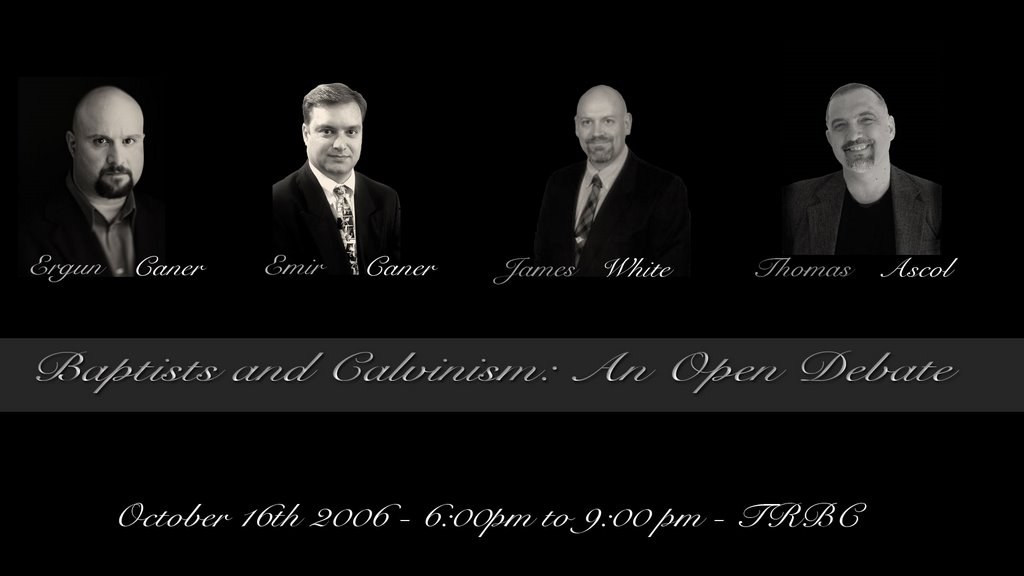
The "big" debate on "Baptists and Calvinism" is coming up on October 16, 2006 from 6-9 pm at Thomas Road Baptist Church in Lynchburg. A van will leave the parking lot at JPBC around 4 pm. We'll grab a fast food supper on the way up, hopefully get there early enough to get good seats, and be home c. 11 pm. I'll post my observations soonafter.

9/11 and Postmodernism

One of the providential benefits of 9/11 has been the impact it has had in challenging the prevailing "post-modern" mindset. After 9/11 more Americans were able to understand that good and evil are patent realities. More Americans have also been led to question the myth that all "religions" are the same. Listen to this quote:

Some things are true and some things are false: I regard that as an axiom; but there are many persons who evidently do not believe it. The current principle of the present age seems to be, "Some things are either true or false, according to the point of view from which you look at them. Black is white, and white is black according to the circumstances; and it does not particularly matter which you call it. Truth of course is true, but it would be rude to say that the opposite is a lie; we must not be bigoted, but remember the motto, 'So many men, so many minds.'" Our forefathers were particular about maintaining landmarks; they had strong notions about fixed points of revealed doctrine, and were very tenacious of what they believed to be scriptural; their fields were protected by hedges and ditches, but their sons have grubbed up the hedges, filled up the ditches, laid all level, and played at leap frog with the boundary stones.

These words are from Charles H. Spurgeon (Lectures to My Students, p. 220), as he critiqued the spiritual life of Victorian era England! The postmodern blurring of the line between right and wrong, truth and falsehood, Biblical and unbiblical is nothing new, and perhaps 9/11 has been a divine corrective to the most recent version of "postmodernism."

JTR

Thursday, September 07, 2006

TV-Free in September

The Riddle family is taking the month of September as a tv-free month. That is, we decided not to watch any tv this month. This was mainly Llewellyn's idea, largely since she thought the kids were too drawn to watching afternoon shows on PBS rather than doing active things like playing outside.
When we moved out to North Garden in Spring 2005 we could not use our rabbit ears to get local tv reception as we had when we lived in C-ville. Llew ended up calling the satellite company. After much inquiry and much resistance to salesmanship offering a gazillion channels at huge costs, my wise wife was able to get the satellite folk to agree to give us only the four local channels plus PBS for which we pay c. $11.00 per month.
But this month the tv is off. Though it's still early in the month, I have found more time to talk/play with my kids before their bedtime and more time to read and to talk to my wife after the kids go to bed. We'll see what happens in October.
JTR

Movie Church: Judgement Lite

A JPBC member brought me a flyer he got in the mail at his apartment about a new church site starting up in a local movie theater. The flyer promises "A Great Church at a Fun Place!" It tells prospective attendees they can expect:
  • Relaxed, casual atmosphere with FREE refreshments and pastries
  • A LIVE BAND playing awesome music
  • Safe, fun environment for kids
  • Real answers for life
  • People genuinely caring for and about each other
  • FREE ADMISSION (no ticket required)


The flyer also directs the recipient to the church website, which offers this description of the new church:


A priority at _____ (new church site) is journey, not judgment. Judgment brings division and it creates discomfort. We want to be on a journey together. A journey allows us to know Christ and to know His hope collectively, rather than on our own. There is no need to go through life alone!


This venture is actually not a new church start but a part of a "multi-site" strategy being launched by this established church. I will be presenting a paper at the Evangelical Theological Society annual meeting November 15-17 in Washington, DC, tentatively titled, "A Biblical-Theological Critique of the Multi-Site Church Movement." I’ll try to post the paper when it's done.


Though I might appreciate the zeal of this church for evangelism and outreach, there are questions about wisdom (Romans 10:2). On churches meeting in movie theaters, see my previous post (March 20, 2006) "Our Lady of the Movie Theater."


Most disturbing is the website note's downplaying of judgement, since "Judgement brings division and it creates discomfort."


Didn’t Jesus say that anyone who comes after him must deny himself and take up his cross daily and follow him (Luke 9:23)? Didn’t Jesus say that he did not come to bring peace but a sword (Matt 10:34)? Maybe I found this particularly jarring, because we just finished a series through the parables in Matthew and each parable of our Lord has a striking word about judgement. A sampling:


The parable of the wheat and the tares:


Matthew 13:40 Therefore as the tares are gathered and burned in the fire, so it will be at the end of this age. 41 The Son of Man will send out His angels, and they will gather out of His kingdom all things that offend, and those who practice lawlessness, 42 and will cast them into the furnace of fire. There will be wailing and gnashing of teeth.


The parable of the dragnet:


Matthew 13:49 So it will be at the end of the age. The angels will come forth, separate the wicked from among the just, 50 and cast them into the furnace of fire. There will be wailing and gnashing of teeth.


The sheep and the goats:


Matthew 25:31 When the Son of Man comes in His glory, and all the holy angels with Him, then He will sit on the throne of His glory. 32 All the nations will be gathered before Him, and He will separate them one from another, as a shepherd divides his sheep from the goats. 33 And He will set the sheep on His right hand, but the goats on the left.


It is judgement, judgement, judgement! Jesus knew that we have to understand the wrath of God before we can appreciate the grace of God. Certainly, unregenerate men do not want to hear of the wrath of God for their sin and the coming judgement. Thus, they often are offended by gospel ministry that is so "judgemental." Still, it is certain that "we must all appear before the judgement seat of Christ" (2 Cor 5:10). For sure, all those parables also announce the future blessings in the kingdom for those who are saved from their sin. But can we clearly preach the gospel without announcing the wrath of God for sin and the only escape through the righteous life of Christ? Can we preach the resurrection without the cross?


"Ah," some say, "but we must catch the fish before we can clean them." But at what point are these seekers told that they must begin denying themselves? That the Christian life is not about "fun" but about holiness (and this brings the greatest joy)? That worship is not entertainment to meet our needs but service to meet God’s demands for glory?


JTR

Wednesday, September 06, 2006

In obedience...

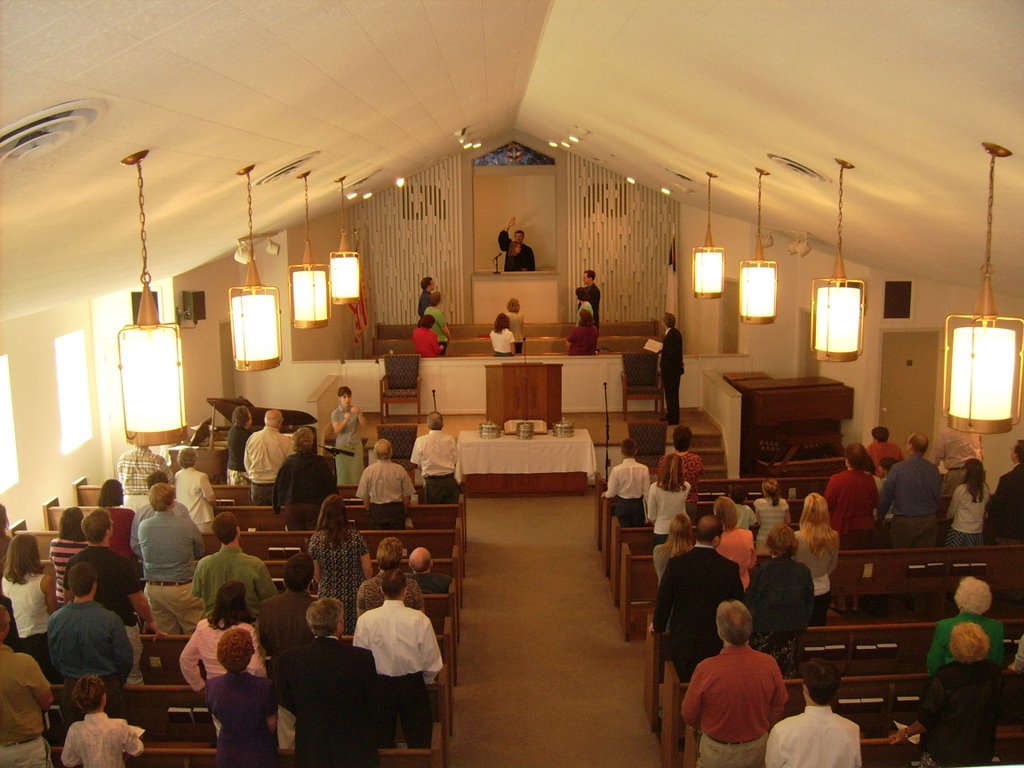
This past Lord's Day (September 3, 2006) JPBC observed the ordinances of baptism and the Lord's Supper.
Here is a picture of the church at worship.
Thanks to one of our youth, Elijah Widder-Varhegyi, for the photo.
JTR

Bible Notes: Paul as a prophet like Daniel

Continuing to flow parallels between OT prophetic figures and the presentation of Paul in Acts.
Compare Daniel’s vision in Daniel 10 with Luke’s account of Paul’s conversion/call on the Damascus Road:

Daniel 10:7 And I, Daniel, alone saw the vision, for the men who were with me did not see the vision; but a great terror fell upon them, so that they fled to hide themselves.

Acts 9:7 And the men who journeyed with him stood speechless, hearing a voice but seeing no one.

Acts 22:9 And those who were with me indeed saw the light and were afraid, but they did not hear the voice of Him who spoke to me.

In both Daniel and Acts, the prophetic figure sees a vision that those accompanying him do not fully comprehend.

Question: Is Daniel really a prophet? Though not a prophet in the classical tradition (like Isaiah, Jeremiah, Amos, etc.) the question is whether or not Daniel would have been perceived as a prophetic figure in the first century by someone like Luke. For Daniel’s inclusion among the esteemed spiritual heroes of Israel, alongside Noah and Job, in the exilic period see Ezekiel 14:14, 20; and 28:3.

Note: Those who seek "errors" in the Bible often see Acts 9:7 and 22:9 as being in contradiction, pointing out that 9:7 says Paul’s companions heard a voice but saw nothing, while 22:9 says they did not heard the voice that spoke to him. Is this is a contradiction? I do not think it is above resolution. In 9:7 the focus is on the fear of Paul’s companions to the point of losing their speech. Luke notes that they heard a voice but saw nothing. In 22:9, however, Paul says that his companions did not hear anything. The point of contention here may be two distinct uses of the verb "to hear" (akouo) in the two verses. The word "hear" can mean reception of sound or it can mean comprehension of intelligible speech. For example, I might hear someone speaking in a foreign language in the sense that my ears are receiving the audible sounds waves. This does not mean, however, that I hear in terms of comprehending and understanding what is being said. This distinction might easily be made in Acts 9:7 and 22:9 as well.

In addition, it is clear that Luke saw no contradiction in the two verses. Surely he would not have allowed such a glaring error to have remained in his text, if, in fact, there is such an error present.

Of course, the clear explanation for why Luke has Paul telling it this way (in 22:9) is, in fact, that this is exactly the way it happened and Luke faithfully has recorded the event. I believe that is true, but Luke also had to be judicious in what he chose by inspiration to write in Acts. He does not include all details, but he was inspired to include those most useful in achieving his overall literary purpose. Thus, it is not unimportant that Luke is led to portray Paul in the ways he does. Here is a thematic parallel, at least, to an event in the life of Daniel, that great OT figure, that Luke may have intended the LXX-saturated reader to understand.

Further question: Was it typical in Luke’s day to describe prophetic figures in circumstances where they are present with companions who are not able to perceive a spiritual experience as it takes place (a la both Daniel and Paul)? In this case Luke would not be modeling Paul on Daniel but on this typical prophetic experience in general.
JTR

Thursday, August 31, 2006

Should you close your eyes while singing in worship?

One more note about music in Deliberate Church.

At one point the authors discourage closing your eyes while singing in worship. They note:

"Many musical worship leaders encourage members (by either word or deed) to close their eyes in pursuit of private emotional intimacy with God in the context of the corporate gathering. Now, no one in their [sic] right mind would argue that closing one’s eyes in corporate worship is categorically wrong. And many close their eyes in the corporate gathering simply to take in the sound of the singing more fully. But we would be wrong to encourage people to think of corporate worship in terms of shutting out the rest of the congregation to have a privatized emotional experience with God" (117-18).

I was struck by that because I sometimes close my eyes while singing in corporate worship and had never considered whether or not this contributed to making worship a more "private" experience. The authors anticipated my first thought in objection—namely that we typically pray with our eyes closed—in a footnote: "We close our eyes for corporate prayers too, but this is an act of reverence as we bow our heads, not an effort to forget about the people around us" (p. 209, n. 6). We might respond that closing one’s eyes while singing might also be an act of reverence (and a part of prayer as well).

I am glad the authors made me think about this. It is a good corrective to some of the hyper-individualism of contemporary worship, but I was not completely convinced by their argument.
JTR

Are choirs Biblical?

More reflections on Deliberate Church.

In the chapter on music, Dever and Alexander argue against choirs, since "we have no example of a church choir in the New Testament—the Bible never represents first century believers entering into musical worship vicariously, through the singing of another group or individual. Rather, the musical worship is participatory—the whole congregation corporately participates in worshipping God with one heart and voice" (116).

1 Corinthians 14:26 might pose a challenge to this argument, since Paul says of worship at Corinth: "Whenever you come together, each of you has a psalm…. Let all things be done for edification." If the "psalm" was a musical offering in worship (cf. Col 3:16), then this might be evidence of individual singing as part of the NT worship experience.

We might also point to choirs in OT worship. It seems that a group of Levites were tasked with special singing (not just leading the entire congregation in musical worship) [see 1 Chron 15:15-22; 16:4-6; 25:6-8; Neh 12:8]. The antiphonal refrain, "For his mercy endures forever," in Psalm 136 also seems to argue for a choir (cf. 2 Chron 5:13; 7:6).

We might also mention the various groups that sing in the heavenly worship recorded in Revelation (the four living creatures, the 24 elders, the angels, and all creatures).

Still, Deliberate Church’s point about the need for corporate musical worship is well taken, if not overstated. Musical worship should not be about a performance but the corporate service of God’s people. It should be God-centered and not man-centered. In fact, the authors point out that Capitol Hill BC uses a small group (choir?) of four people to lead congregational singing.
JTR

Tagged

My friend Travis Hilton recently "tagged" me in his blog to answer a few questions:

1. One book that changed your life: The Cost of Discipleship, Dietrich Bonhoeffer. Though I am not now a fan of DB, reading this book the summer after my first year in college made me think more seriously about what it means to be a disciple of Jesus Christ.
2. One book that you’ve read more than once: Pilgrim’s Progress, John Bunyan.
3. One book you’d want on a desert island: Robinson Crusoe, Daniel Defoe.
4. One book that made you laugh: Lectures to My Students, C. H. Spurgeon.
5. One book that made you cry [or feel really sad]: A Generous Orthodoxy, Brian D. McLaren [truly awful].
6. One book that you wish had been written: Everything You Wanted to Know About Being a Pastor But Were Afraid to Ask.
7. One book that you wish had never been written: A Generous Orthodoxy, Brian D. McLaren [Have I mentioned that I did not really care for this book?].
8. One book you’re currently reading: Nicomachean Ethics, Aristotle.
9. One book you’ve been meaning to read: Fifty Years Among the Baptists, David Benedict.
10. Now tag five people: Given that Travis tagged just about everyone I know who might respond to this in a blog, I reserve the right not to tag anyone else.
JTR

Wednesday, August 30, 2006

On parachurch people who do not belong to local churches

Over the summer I had a conversation with a man who is very involved in a local parachurch mission agency. He is very passionate about supporting indigenous missionaries in other countries, and we were in a place to hear one such worker speak.

As we talked I asked him: "So, which local church do you belong to here in Charlottesville?" His reply: "Well, we mostly attend ______ (a large evangelical church in the area), but we’re not members anywhere."

Now, this man has lived in Charlottesville for years. He is passionate about supporting missions. He is a professed believer. How is it then that he thinks he can operate as a freelance Christian without a serious, covenanted connection to a local body of believers? Why is the doctrine of the local church so lacking in his practical theology?

I have found some parachurch persons to have this same attitude. They love to talk about the work of the church universal, but they have not taken the time to become connected as a body part to the church local (see I Corinthians 12). Part of the issue, I think, is a lack of accountability. If you belong to a local church, people will actually expect you to faithfully attend services (even if it might not fit your schedule), to give your money to its work (rather than your select mission causes), to inspect your doctrine (holding your personal beliefs accountable to Biblical orthodoxy), and to serve the needs of the body (in ways you may or may not particularly enjoy).

At the "Together for the Gospel" Conference this past year, the conference leaders issued a set of Affirmations and Denials. Article XIV reads:

We affirm that the shape of Christian discipleship is congregational, and that God's purpose is evident in faithful Gospel congregations, each displaying God's glory in the marks of authentic ecclesiology.

We deny that any Christian can truly be a faithful disciple apart from the teaching, discipline, fellowship, and accountability of a congregation of fellow disciples, organized as a Gospel church. We further deny that the Lord's Supper can faithfully be administered apart from the right practice of church discipline.

When I was a missionary in Hungary, I even found that some of my fellow missionaries never got connected with a local church. They talked a lot about witnessing to students and neighbors, but if they ever had one of these persons comes to Christ what would they do with them? How would they be discipled? You cannot do ministry apart from the local church! Remember, Jesus did not say, "I will build my parachurch group or my ministry or my mission organization," but "I will build my CHURCH (ecclesia-the local congregation)" (Matthew 16:18).

Grace and peace, Pastor Jeff Riddle

Tuesday, August 29, 2006

World Congress of Hungarian Baptists

I ran across this news item about the recent "World Congress of Hungarian Baptists" that drew over 5,000 people (that is truly amazing in itself) in Debrecen, Hungary.
Thankfully, according to the report, the Hungarians affirmed a statement declaring:
“We believe that the only solution for mankind living in ever more complicated social circumstances is our Lord Jesus Christ.”
Amen! But it apparently went on to declare the Treaty of Trianon (in which Hungary's borders were diminished after WWI) in 1920 as unjust! Do you think Eastern Europeans have long memories?
It also seems that Baptist World Alliance officials were heavily involved.
One of the speakers was Dr. Kalman Meszaros. I taught with his father (who shares the same name) at the seminary in Budapest from 1990-92 and once interpreted his Dad's preaching into English for the International Baptist Church that met in the seminary.
Pray for God to move among Hungarian peoples and draw many to Himself in Christ and to give them a vision beyond their own ethnic group.
JTR

Why do you homeschool?

The other day I went to visit a very sweet, elderly, home-bound woman in our church. She is not a "Food Lion shut-in" as my pastor friend Paul Beith used to say—a "Food Lion shut-in" according to Paul is someone who is able to make it out to do their grocery shopping at Food Lion on Saturday but who is too "sick" to come to church on Sunday. This is a dear lady who loved to be in the Lord’s house when in good health, but who is now confined to home with legitimate physical infirmities.

Anyhow, we were catching up on church and family happenings. She asked how my family was doing and I mentioned that we had started school last week and that I am teaching the children on Fridays, my day off. Then, with real bewilderment, she asked, "Why do you keep your children at home for school?" It is truly hard for her to understand why we are doing this.

Having been asked this a time or two before I gave her my three standard reasons why we decided to do home education:

1. Family closeness. Homeschooling has allowed our family to spend lots of time together. We are not operating according to the local school system’s (or even a private school’s) calendar or daily schedule. Our children are able to spend a lot of time with us, and they are also able to spend a lot of time with each other.

2. Protecting our children from harmful influences and positively shaping their worldview. Home education gives us a great opportunity to shape what our children read, listen to, and think about. Biblical studies is part of our curriculum and informal theological/spiritual conversations are part of the weekly routine.

3. Academics. Finally, we think we have been able to give our children a more challenging academic environment. The teacher to child ratio is low, and we can focus on their immediate needs.

My friend likely still thinks our decision is sort of odd, but perhaps she understands a little better.

JTR

Monday, August 28, 2006

"That mean old preacher" and great sermon titles

One of the featured sermons last week on sermon audio was Doyle Cooper's "That Mean Old Preacher." I listened to part of the message, but was most taken with the title.
That got me thinking about some of my other favorite sermon titles I've seen on sermon audio. How about Rolfe Barnard's classic "The God of the Bible Kills People"?
Or Charles Spurgeon's "Rubbish"?
Don't those titles make you want to listen?
Of course, my message yesterday morning was the highly imaginative "The Parable of the Talents" and in the evening "Malachi 4."

JTR

Thursday, August 24, 2006

How should a church hire staff?

More reflections from Dever and Alexander’s The Deliberate Church (Crossway, 2005):
In the chapter on staffing, the authors discourage the typical contemporary practice of hiring ministry specialists (youth minister, music minister, etc.). The alternative is to hire generalists to serve as pastoral assistants involved in the "all-around ministry" of the church.
They list four pitfalls of the specialist staffing approach:

1. Professionalization. This approach comes from the niche-marketing driven corporate world and not from the Bible.

2. Fragmentation. This approach tends to divide ministers, members, and ministry into "their own ministry cubicles" (163).

Youth ministry is given as an example. Here’s a longer quote:

"Simply by specializing the youth, we’re separating them from the adults. But aren’t we trying to train them to be adults? So why are we trying to take them away from the very source of influence that can help them grow up? We’re doing it, often, because we’ve professionally specialized our ministries to make them look more marketable to our ‘target audience.’ And so adults pass teenagers in the hallways like ships in the night, never dreaming that each could build up the other" (164).

3. Territoritality. This is an offshoot of #2 above.

4. Program drivenness. This approach makes the church dependent on various programs for success and not on the corporate witness of the body.

JTR