Showing posts with label psalms. Show all posts

Wednesday, March 19, 2025

WM 325: Review of Seven Significant & Curious Problems with Mark Ward's "Scholarly" Article on Psalm 12:6-7


Here are notes from my review of MW's "scholarly" article:

First: The article, beginning with its title, attacks a straw man.

Mark Ward suggests he is opposing those who hold that there are (or were in 1611) extant “Perfect Manuscript Copies of the Bible” and conflates this with those who hold to the perfect preservation of the Scriptures (as in WCF 1:8: “kept pure in all age”). He never demonstrates (through credentialed citations), beyond his own assertions, that those whom he lists as his opponents advocate for the existence of “Perfect Manuscript Copies of the Bible.”

Second: MW falsely blames the KJV’s use of the adjective “pure” (Psalm 12:6) and the verb “preserve” (Psalm 12:7), for causing confusion regarding the proper interpretation of Psalm 12 (see p. 30).

These terms in English were not invented by the KJV translators but are part of the classic Protestant English translation tradition. See the use of the same terms at Psalm 12 in Coverdale’s Psalter (1553).

Third, MW falsely suggests that interpretations of Psalm 12:6-7 as related to the preservation of Scripture are the result of “English-only exegesis” which “can give rise to falsehoods and unnecessary divisions within the body of Christ” (p. 30).

Those he lists as suggesting Psalm 12:6-7 as relating to the preservation of Scripture, however, clearly do not do so simply on the basis of English translations, but on the reading/interpretation of the Hebrew original (cf. Thomas Strouse and PVK2 on “gender discordance” as a stylistic feature of Hebrew) (p. 32).

Fourth, MW misrepresents my position in this article.

He lists myself, “Jeffrey Riddle,” as a “leading” proponent of the interpretation of Psalm 12:6-7 which he opposes, but he does not accurately present my position. The best documentation he can provide for my views are two quotations (one not properly enclosed in quotation marks) taken out of context from a 2022 podcast [see pp. 32-33]).

I have done no formal, published writing on this passage. Oddly enough, MW makes no reference even to the only informal writing I have done on this text in the only blog post.

Fifth, in his “interpretive plebiscite” MW perpetuates his straw man presentation of his opponents, who supposedly read Psalm 12:6-7 as promising “perfect manuscript copies of the Bible” (p. 39).

Of course, the straw man view will not be found in the survey, because, as far as I know, no one hold it. The real question is whether there are interpreters of Psalm 12:6-7 which connect this passage to the preservation of the “pure words” of Scripture, prior to the rise of KJVO in the mid-20th century.

Even MW’s survey is suspect as he overlooks historical figures who interpret Psalm 12:6-7 counter to his thesis (e.g., John Wesley, Ebenezer Ritchie, etc.).

MW’s false pretext, leads to false conclusions: “This writer could not find a single interpreter before the advent of KJV-Onlysim who interpreted Psalm 12:6-7 to promise perfect manuscript copies of the Bible” (p. 49).

Sixth, MW insists that the “purity” and “preservation” of Scripture in Psalm 12:7 can only apply to the content of Scripture and not to the words of Scripture (see p. 50).

He here denies the classic Protestant construal of the authoritas divina duplex.

He also completely rejects the classic Protestant approach which acknowledges the existence of textual variants in the transmission of manuscripts while also affirming the providential preservation and reception of Holy Scripture.

See Thomas Watson’s comments on the preservation of both the matter and form of Holy Scripture.

Seventh, MW thus wrongly concludes that Psalm 12:6-7 is completely irrelevant as an apologetic prooftext for both the purity of Scripture (in content and words) (v. 6) and the preservation of Scripture (v. 7), as well as the preservation of God’s people (v. 7), and suggests that anyone who holds such a view in like Athanasius standing along against the world.

He does not acknowledge that one might well hold a “both-and” perspective on Psalm 12:7. It refers both to God’s preservation of his needy people and the preservation of everyone of his promises (words) to them. This indeed is a distinct theme we see elsewhere in Scripture (see Isaiah 59:20-21).

Counter to MW’s conclusion, the view that Psalm 12:6-7 applies to the preservation of the purity of Scripture is hardly an “Athanasius” that must stand “against the world.” Even MW’s own article lists more than 20 historical figures who held such a position.

JTR


Thursday, February 27, 2025

WM 323: Article Review: The Supposed Missing נ Verse in Psalm 145


Why have modern Bibles, like the NIV and ESV, begun adding a supposedly "missing" verse in Psalm 145?

Are they "correcting" the "corrupted" traditional Hebrew text or misunderstanding an original, intentionally irregular acrostic Psalm?


JTR

Wednesday, January 04, 2023

Habakkuk 3 as a Prayer Psalm


Taken from my twitter: @Riddle1689:

Habakkuk 3 is a prayer. See 3:1a: “A prayer of Habakkuk the prophet…”

It also has the marks of a Psalm. Like many of the Psalms (see, e.g., Ps. 90: “A prayer of Moses, the man of God”), it was a prayer that was also meant to be sung.

A reference to the ancient tune is given in v. 1b: “upon Shigionoth.” Some think the word means “according to variable songs or tunes.”The same term (in the singular) appears in the title of Psalm 7.

There is another musical notation at the end in Habakkuk 3:19b: “To the chief singer on my stringed instrument [Hebrew: Neginoth; the same terms appears in the titles of Psalms 4, 6, 54, 55, 67, and 76].”

Habakkuk 3:2-16 is also punctuated with another term also found in the Psalms, Selah, likely meaning pause or rest (see vv. 3, 9, 13).

So Habakkuk 3 is a Psalm outside of the Psalms.

One question for those who hold to "exclusive psalmody": Since Habakkuk 3 is an inspired Prayer Psalm, would it also be fitting to sing it in worship?

JTR


Tuesday, August 09, 2022

WM 245: Examining Mark Ward's Claims on Psalm 12:6-7 and the Preservation of Scripture


I posted WM 245 last week but am just getting around to posting it here along with my notes.

In this episode we will be examining MW’s claims concerning Psalm 12:6-7 and the preservation of Scripture.

In WM 244 I posted a sermon I preached seven years ago on Psalm 12 and the doctrine of the providential preservation of Scripture. In that episode I suggested I might do a follow up podcast relating to Psalm 12:6-7 and the preservation of Scripture in light of MW’s recent suggestion that no one in the history of Christianity until KJVO (in the mid-twentieth century) has used Psalm 12:7, in particular, in reference to preservation.

Here is the claim MW had made:

First: FromTCC 3/7 (posted 7/25/22), MW said (c. 8:40 mark):

And I could not find anybody who used Psalm 12:7, and especially the second half of v. 7—“though shalt preserve them from this generation for ever”—I couldn’t find anybody in the history of the church until KJV-Onlyism… I can’t find anyone who applied Psalm 12:7b … to textual preservation….

Second, in a review of the book I co-edited of Why I Preach from the Received Text, a review at least one person described as “toxic”, posted to his blog (7/24/22), Ward writes:

The writers in this book, for all their appeals to the Reformed tradition, do not represent the historic orthodox or Reformation position on the Bible….

He then adds:

They misuse Bible passages such as Psalm 12:6–7, which (I have shown in a recent paper) have never in the history of the church until the advent of KJV-Onlyism been used the way KJV/TR defenders use this passage.

The question: Is Mark Ward’s claim true?

I want to approach this from two directions:

First direction: Is it irrational to suggest that the pronouns in v. 7 might be taken in reference to the “pure words” in v. 6?

Two kinds of objections might be raised against taking v. 7 as referring to the “pure words” of v. 6.

The first objection relates to the fact that the pronouns in v. 7 are masculine in gender and “pure words” in v. 6 are feminine.

Response: Peter Van Kleeke, Sr. in An Exegetical Grounding For A Standard Sacred Text (2021) on p. 45 (n. 1) of his discussion on Psalm 12 cites Gesenius’ Hebrew Grammar (originally published in 1813; Oxford/Clarendon English translation reprint, 1990):

“Through a weakening in the distinction of gender, which is noticeable elsewhere, and which probably passed from the colloquial language into that of literature, masculine suffixes (especially in the plural) are not infrequently used to refer to feminine substantives.”

The second objection relates to the pronoun in v. 7b being in the singular (“him” though translated “them” in the AV).

The pronoun, however, can simply be understood in a representative and collective sense, meaning something like, “thou shalt preserve him [meaning, every single one of the poor, or every single one of the pure words] from this generation for ever.”

MW seems willing to grant that v. 7a might refer to the preservation of the words, but he is adamant that this does not apply to v. 7b.

One major problem with this statement, however, is that it fails to recognize that v. 7 appears to utilize the form of Hebrew poetry known as “synonymous parallelism.” That is, the author makes a statement in the first clause, and then uses slightly different words or terms in the second clause to repeat or even emphasize the initial statement.

Given this convention, v. 7b is likely best understood as simply restating and affirming, if not expanding upon, v. 7a.

Another problem with MW’s interpretation regards a point I made in my sermon on Psalm 12 (from WM 244). Namely, the statement in Psalm 12:7 should be taken as a “both-and” rather than an “either-or.” The pronouns in v. 7 refer both to the “poor” in v. 5 and to the “pure words” in v. 6. I also noted that this was the interpretation given by Matthew Poole in his Commentary on Psalm 12:7.

Preliminary conclusion: It is not irrational to think that v. 7 refers to the preservation of Scripture.

Second direction: Is the interpretation of Psalm 12:7 as relating to the preservation of Scripture unknown in Christian history prior to KJVO in the mid-20th century?

MW claims to have consulted over 60 commentaries without finding anyone who interpreted Psalm 12:7 as relating to the preservation of Scripture.

His claim, however, brought to mind Van Kleeck, Sr.’s work cited above, which has a substantial discussion of Psalm 12 (see pp. 45-79), including the issue of whether v. 7 can be interpreted to relate to Scriptural preservation. In the course of discussion, Van Kleeck, Sr. cites several pre-modern examples of such an interpretation from Christian writers.

First: The Italian exegete Michael Ayguan (1340-1416) in his commentary on the Psalms. He wrote: “Keep them: that is, not as the passage is generally taken, Keep or guard Thy people, but Thou shalt keep or make good thy words: and by doing so, shalt preserve him—him, the needy, him the poor—from this generation” (54-55).

Second: Martin Luther (1483-1546) wrote a commentary on Psalm 12 in 1519. Van Kleeck, Sr. says Luther noted “three possible interpretations of this passage: the words, the saints, and the ungodly” (56). He cites Luther as saying, “it is in the Hebrew ‘thou shalt preserve them’; and it refers to the words of God, as [Jerome] translates it” (56).

Third: Luther’s hymn (1523) titled “Look down, O Lord, from heaven behold,” based on Psalm 12. He cites this translation of Luther’s second stanza:

            Thy truth wilt [persevere], O Lord,

                        From this vile generation,

            Make us lean on thy Word,

                        With calm anticipation (61).

Fourth: The Protestant English Bible translation tradition: Coverdale Bible (1535); Matthews Bible (1537, [1549]); Taverner Bible (1539); The Great Bible (1540); The Third Part of the Bible (1550); Geneva Bible (1560); Bishop’s Bible (1568); KJV (1611).

Fifth: Matthew Poole’s Commentary (1685). He writes:

Thou shalt keep them, either 1. The poor and needy, Psalm 12:5 …. Or, 2. Thy words or promises last mentioned, Psalm 12:6… (75).

Sixth: In John Wesley’s Explanatory Notes on the Old Testament (1765), he writes:

“Thou shalt keep them—Thy words or promises: these thou wilt observe and keep, both now, and from this generation for ever” (76).

In addition to these six, I might add Calvin’s commentary on the Psalm (1557). Though Calvin does not prefer to take “them” in v. 7 in reference to the “pure words” he writes: “Some give this exposition of the passage, Thou wilt keep them, namely, thy words; but this does not seem to me to be suitable.”

Again, this is not the interpretation he prefers, but he acknowledges “some” held the view in his day that v. 7 referred to the preservation of the words.

BTW, the Calvin Translation Society edition of Calvin’s Commentary on Psalms (1845) has a note at “thy words” above, stating, “This is the view of Hammond. He refers the them to the words of the Lord mentioned in the preceding verse, and the him following to the godly, or just man, and explains the verse thus: ‘Thou, O Lord, shalt keep, or perform, those words, thou shalt preserve the just man from this generation for ever” (178).

In the comments section on MW’s blog on his review post, R. L. Vaughan challenges MW’s claim and adds a few more pre-modern examples of Protestants interpreting Psalm 12:6-7 as referring to scriptural preservation. They include (listed in the order posted by Vaughan):

W. A. Jarrel (1907);

Louis Gaussen in his famous work on inspiration (1844);

Samuel Hanson Cox (1833);

Joseph Parker (c. 1885);

Spurgeon’s sermon on Psalm 12:6 (no date);

H. Donner (Dutch writer; no date);

Samuel Howard Ford (1903);

Possibly James Montgomery Boice’s Psalms commentary;

Ebenezer Richie (1868).

MW’s response to Vaughan: “Give me some time to consider what you have brought forward.”

Conclusion:

Here’s the problem with MW’s argumentation on Psalm 12:6-7. He wants to suggest that CB uses the same arguments in favor of the preservation of the traditional text that KJVO use for their position, and thus to discredit the book (in his so-called “toxic” review) and the CB movement in general (in the TCC video) by tying it to KJVO. He does so even though he has recently publicly stated that he would no longer attempt to conflate CB with KJVO.

This leads MW to make this claim (that no one in the history of Christianity connected Psalm 12:7 with scriptural preservation until the modern KJVO movement) apparently without ever properly investigating whether or not that claim is true. It isn’t.

It reminded me of his claim in his 2020 article critiquing CB that there were 28 editions of the TR prior to Scrivener. That’s factually inaccurate (as I pointed out in my recent review of MW’s article at the Kept Pure conference), but it makes for good rhetoric.

One wonders when he made this claim about Psalm 12:6-7 on the TCC why others on the panel who have publicly declared that they care about “just weights and measures” and “getting the facts right” did not object or at least questions the validity of it.

One also wonders if Mark Ward be offering a public correction/retraction of this claim or doubling down on it?

JTR


Monday, August 08, 2022

Ebenezer Ritchie on Psalm 12:6-7


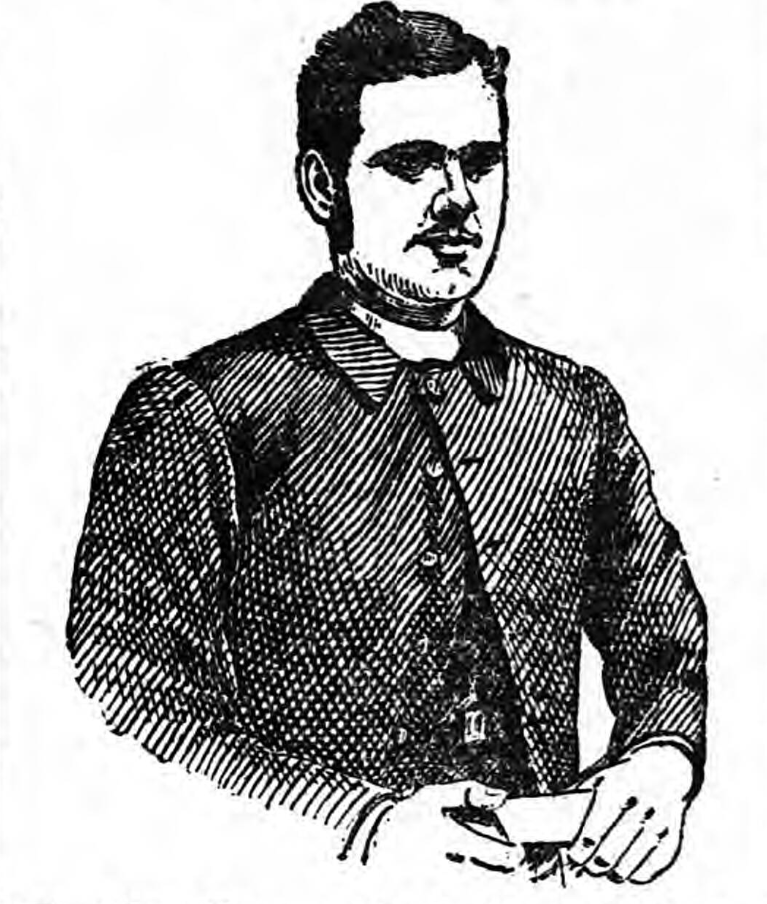
Image: I found this sketch of Ebenezer Ritchie on the website of the town of Paisly, Scotland in an article on the restoration of the Original Secession Church building where he served as pastor.

Note: R. L. Vaughan posted this quote to comments on the WM 245 youtubevideo, and I shared on my twitter @Riddle1689 and thought I’d post here too.

Scottish Presbyterian Ebenezer Ritchie on Ps. 12:6-7 and the preservation of Scripture (1868):

“Before passing from this subject, I would advise, in reference to the canon of Scripture, that you meddle not with them that are given to change. We might reason, a priori, from the regard God has to His Word, and the important ends intended by it, as a perfect and infallible record and rule, that it is so much the object of His care and superintending providence that no book of Scripture has perished, and even that no words of God contained it have been lost.

‘The words of the Lord are pure words: as silver tried in a furnace of earth, purified seven times. Thou shalt keep them, O Lord, thou shalt preserve them from this generation for ever.’

But the question occurs, where are the original inspired words of Scripture to be found? We answer, In the received Hebrew and Greek texts, with their marginal readings, which are the prototype of our English version, and of almost all vernacular translations of the Scriptures at the present time.”

From The Original Secession Magazine, Rev. E. Ritchie, Address to the Students of Divinity of the United Original Secession Church, Volume VIII, No. XII, November 1868, p. 734.

JTR

Friday, July 10, 2020

The Vision (7.10.20): Psalm 126: Restoration Song


Image: Phlox David, North Garden, Virginia, July 2020


Note: Devotion taken from last Sunday's sermon on Psalm 126.

The LORD hath done great things for us; whereof we are glad (Psalm 126:3).

Psalm 126 is set at the time of Israel’s return or restoration from exile. So, it begins, “When the LORD turned again the captivity of Zion we were like them that dream” (v. 1). This return came after some 70 years of bondage in Babylon with the edict of Cyrus, when the Persians had toppled the Babylonians (see 2 Chron 36:22-23; Ezra 1:1-3).

Psalm 126 is, then, a Restoration Song. In v. 3a the Psalmist exults, “The LORD hath done great things for us.” Spurgeon called this verse, “the marrow of the whole Psalm.” The words here recall the words of the old gospel hymn: “Great things he hath taught us, great things he hath done.”
We see here the sanctified insight of looking back in hindsight, in retrospect. The exile was a catastrophe, but the Psalmist sees the good that the Lord wrought in those circumstances and the liberation he accomplished.
The last statement in v. 3b is the summary perhaps of the entire Psalm: “whereof we are glad.” This tells us that there is a place in the Christian life for expression of gladness, for exuberant praise.
Christ himself set us a model for this. In Luke 10:21 we read of a time when Christ “rejoiced in the Spirit” and burst into a spontaneous praise to the Father, which began, “I thank thee, O Father, Lord of heaven and earth.”

The apostles continued the pattern, as demonstrated when Paul exhorted the Philippians to praise even while he was himself imprisoned: “Rejoice in the Lord alway: and again I say, Rejoice” (Phil 4:4). There is a pattern here for us to follow.
Psalm 126 ends with a promise of fruitfulness after tears, “He that goeth forth and weepeth, bearing precious seed, shall doubtless come again rejoicing, bringing his sheaths with him” (v. 6).
We are here encouraged to be fruitful, to go forth weeping, bearing precious seed, confident not in ourselves, but in the Lord, so that in due time he will bring about a great harvest.
We are reminded overall that tears of suffering, tears of labor, tears of struggle, tears of repentance, most often precede seasons of fruitfulness. So, we are called to perseverance in the faith. This faith is not a sprint, but a marathon.
You may be walking through a season of tears, but joy and fruit will come in the morning (cf. Psalm 130:5). There are for God’s people, corporately and individually, seasons of restoration.
Finally, this Psalm should also cause us to fix our eyes on Christ. Spurgeon, in his exposition of Psalm 126, suggests that “In a fuller, deeper sense, the sower in tears is the Man of sorrows himself.” Adding, “Believers know him thus.” He endured “the sore travail of his soul, the seedtime of affliction” that he might gain “the satisfying harvest when he shall again appear as the reaper of his own reward.”
Grace and peace, Pastor Jeff Riddle

Friday, July 03, 2020

The Vision (7.3.20): A Song for Exiles: Psalm 137


Image: Gaillardia (aka, Fire-Wheel, Indian Blanket) flowers, Topsail Island, North Carolina, July 2020.

Note: Devotional taken from last Sunday's sermon on Psalm 137.

How shall we sing the LORD’s song in a strange land? (Psalm 137:4).

Psalm 137 was composed after the fall of Jerusalem by one carried away into exile in Babylon. The central section, vv. 4-6, expresses a resolution to faithfulness in the midst of great distress.

It begins with a rhetorical question: “How shall we sing the LORD’s song in a strange land?” (v. 4).

There are several angles to this question. From one perspective, it may be asking, how can we possibly sing praises to God in the midst of such despair and loss?

Have you ever found it hard to coax your heart to sing praises unto your God?

There is another angle to this question: How shall we sing the song of Jehovah, the one true and jealous God, in a land filled with idols and pagan deities?

Next, the Psalmist expresses a resolution never to forget Jerusalem, never to forget the temple where the one true God was worshiped.

The Psalmist vows, “If I forget thee, O Jerusalem, let my right hand forget her cunning” (v. 5); “If I do not remember thee, let tongue cleave to the roof of my mouth; if I prefer not Jerusalem above my chief joy” (v. 6).

I once heard a sermon on Psalm 137 in which the preacher rightly suggested that the new covenant believer might substitute the word “Christ” for “Jerusalem” in vv. 5-6: If I forget Christ, let my right hand become useless; if I do not remember Christ, let my tongue cleave to the roof of my mouth; if I prefer not Christ above my chief joy.

I recently read a book by a Russian scholar who described how for over 70 years communism tried to stamp out the Christian faith in that land. This author then addressed Christians in the West who are fearful of entering what has been called a modern “post-Christian” age. He closed with the following: “The post-Christian age will come only after the second coming of Jesus Christ. As long as the history of mankind continues on earth, Christ will continue to act in history. His divine countenance will always attract people, and generation after generation will become Jesus generations” (Hilarion Alfeyev, Jesus Christ: His Life and Teaching, Vol. 1, 537).

Like the Psalmist of old, whatever our present circumstances, we will continue to sing the Lord’s song in a strange land and resolve to stand firm in the faith, prizing Christ above our chief joy.

Grace and peace, Pastor Jeff

Friday, November 16, 2018

The Vision (11.16.18): Martin Luther on the Psalms as "a little Bible"


At the end of October, we marked the five hundred and first anniversary of Martin Luther’s nailing of his Ninety-Five Theses to the church door at Wittenberg (October 31, 1517), thus igniting the Protestant Reformation. Luther’s rediscovery of the Biblical doctrine of salvation came not only from his study of New Testament books like Romans and Galatians, but also from his study of the Psalms. Luther described the book of Psalms (the Psalter) as “a little Bible.” He saw what previous generations of Christians stretching back to the apostles has also discovered: The Psalms speak of Christ. Luther wrote:
The Psalter ought to be a precious and beloved book, if for no other reason than this: it promises Christ’s death and resurrection so clearly—and pictures his kingdom and the condition and nature of all Christendom—that it might well be called a little Bible. In it is comprehended most beautifully and briefly everything that is in the entire Bible. It is really a fine enchiridion or handbook. I fact, I have a notion that the Holy Spirit wanted to take the trouble himself to compile a short Bible and book of examples of all Christendom or all saints, so that anyone who could not read the whole Bible [could] have here anyway almost an entire summary of it, comprised in one little book (as cited in Timothy George, Reading Scripture with the Reformers, p. 186).
May we continue to read, pray, preach, and sing this “little Bible” of the Psalter so that we might learn more of Christ.
Grace and peace, Pastor Jeff Riddle

Friday, March 02, 2018

Book Review: Sing a New Song


I have uploaded a spoken version of my book review of Joel R. Beeke and Anthony T. Selvaggio, eds, Sing a New Song: Recovering Psalm Singing for the Twenty-First Century (Reformation Heritage Books, 2010) which appeared in Puritan Reformed Journal, Vol. 4, No. 1 (January 2012): 325-328.

You can listen to the review here. You can also read it as a pdf here or here.

JTR

Wednesday, February 14, 2018

Select List of Works on Psalm Singing


Image: From the Geneva Psalter (1556)

Note: A friend recently asked me for a list of resources on psalm singing, so I compiled the select list below. You can also find resources on psalms at the Crown and Covenant site (here).

1.    Michael Bushel, The Songs of Zion (Crown and Covenant, 1980).

This is probably the strongest and most extensive modern defense of exclusive psalmody.

2.   Joel R. Beeke and Anthony T. Selvaggio, Eds., Sing a New Song: Recovering Psalm Singing for the Twenty-First Century (Reformation Heritage Books, 2010).

This is a collection of articles on Psalm singing in history, Psalm singing in Scripture, and Psalm singing and the modern church.

3.   The Worship of God: Reformed Concepts of Biblical Worship (Mentor, 2005).

This is a collection of papers from the Spring 2003 Theology Conference at Greenville Presbyterian Seminary. Chapter 8 is “The Biblical Case for Exclusive Psalmody” by Brian Schwertley (pp. 181-204) and Chapter 9 is “A Defense of Biblical Hymnody” by Benjamin Shaw (pp. 205-218).

4.    Malcolm Watts and David Silversides, The Worship of God (Market Press, 1998).

This book has three papers on the theme of worship from the 1997 Salisbury Conference. The articles argue against the use of instruments in worship and in favor of exclusive psalmody.

5.   W. Gary Crampton, “Exclusive Psalmody,” in John W. Robbins, Ed. The Church Effeminate (The Trinity Foundation, 2001): 150-161.

Crampton argues in favor of singing psalms in worship but also that there is no Biblical warrant to eliminate altogether uninspired hymns and songs. He holds that one does not need to be an exclusive psalmodist to be confessional.

JTR

Wednesday, February 22, 2017

Book Finds: Samuel Miller on ecclesiology and the 1866 Psalms and Hymns

I was out running an errand his afternoon and stopped in at a used bookshop where I was pleased to pick up two reasonably priced volumes.

One is Samuel Miller's The Primitive and Apostolical Order of the Church of Christ Vindicated (Philadelphia: Presbyterian Board of Publication, 1840). It is stained but still a handsome copy:


The other is Psalms and Hymns for the Worship of God (Richmond: Presbyterian Committee of Publication, 1866). The spine is damaged but it's a beautiful little book with two sections. Part one has the 150 psalms and part two has evangelical hymns. Some pics:


And, in good providence, out of the psalter hymnal dropped a 1902 series Franklin one cent stamp:


Good day.

JTR

Tuesday, October 27, 2015

Christ: The Great Soloist


“Saying, I will declare thy name unto my brethren, in the midst of the church will I sing praise unto thee” (Hebrews 2:12).

This is a direct quote from Psalm 22:22.  Psalm 22 is one of the great passion psalms that prophesied Christ’s death on the cross.  Jesus, in fact, quoted Psalm 22:1 from the cross (cf. Mark 15:34).

The citation here, however, speaks not of the cross but of Christ’s presence among his people.  The Son speaks to the Father and says he will declare God’s name to his brethren in the midst of the church (ekklesia).  It adds that he will sing praise [hymneo; a term many take as a reference to singing psalms; cf. Eph 5:19; Col 3:16] unto the Father from among the brethren.

This verse promises that when the brethren gather together Christ himself is in their midst ministering to them.  He is speaking to them.  He is leading the singing of praise to the Father.

In a book promoting the singing of psalms in worship titled Sing a New Song (read my review here), one of the authors makes reference to the citation of Psalm 22:22 in Hebrews 2:12 and adds this:

But there is an orientation toward worship called for in the Psalter that is very different from what is common in the modern church.  Often, congregations in the church today see themselves as the choir (the “performers”) singing praise to God (“the audience”).  The Psalter calls us to refine this outlook:  it teaches us to view ourselves as “a backup ensemble” singing with a great Soloist who is the primary “Performer.”  It is the Son of David who stands as “the sweet psalmist” beloved by the Father.  We, who enter into the Father’s delight in Christ, are privileged to join with Jesus in His songs as we sing the Psalms….  We need to learn, again, to sing the Psalms with Christ (pp. 109-110).

Indeed, when we sing praise to God in corporate worship we would do well to remember that Christ is our Music Minister.  He is the Great Soloist whose lead we follow.


JTR

Friday, July 24, 2015

The Vision: Psalm 12:6-7 and Preservation


Note:  Here are some notes from last Sunday’s sermon on Psalm 12:

Psalm 12:6 The words of the LORD are pure words: as silver tried in a furnace of earth, purified seven times. 7 Thou shalt keep them, O LORD, thou shalt preserve them from this generation for ever.

Does Psalm 12 support the doctrine of the providential preservation of God’s Word?

I believe the answer to that is “Yes.”  The heart of that comes in v. 6.  God’s word is pure.  It has been made pure by God himself.  It is not an adulterated word.  It is like silver purified in a furnace of earth, purified seven times.  Notice:  It was not left in a state of impurity and corruption for thousands of years until the right scientific knowledge arose to purify it.  It has always been pure.

Though we might grant that the thrust of v. 7 is about the preservation of God’s people (rather than directly about the preservation of his Word) that is not a point unrelated to the doctrine of the divine preservation of Scripture.  Why can God’s people have confidence in his ability to keep them?  Because the Lord keeps his promises.  He keeps his word.  His Word can be trusted in all generations!

The Geneva Bible notes on v. 5 declare:  “Because the Lord’s word and promise is true and unchangeable, he will perform it and preserve the poor from this wicked generation.”

So, the right interpretation of Psalm 12:7 need not be “either it is about the preservation of Scripture or it is about the preservation of God’s people,” but “both, and.”  This is the way Matthew Poole understood it when he said that the meaning of v. 7 is that God’s preservation refers to “either:  (1) the poor and needy, ver. 5, from the crafts and malice of this crooked and perverse generation of men, and for ever. Or, (2) The words or promises, last mentioned, ver. 6.”

There is a joining here of two great and related doctrines. God keeps his Word and God keeps his people.  God preserves his Word and God preserves his people.


Grace and peace, Pastor Jeff Riddle