Showing posts with label Means of Grace. Show all posts

Friday, February 24, 2023

The Vision (2.24.23): The Ordinary Means of Grace


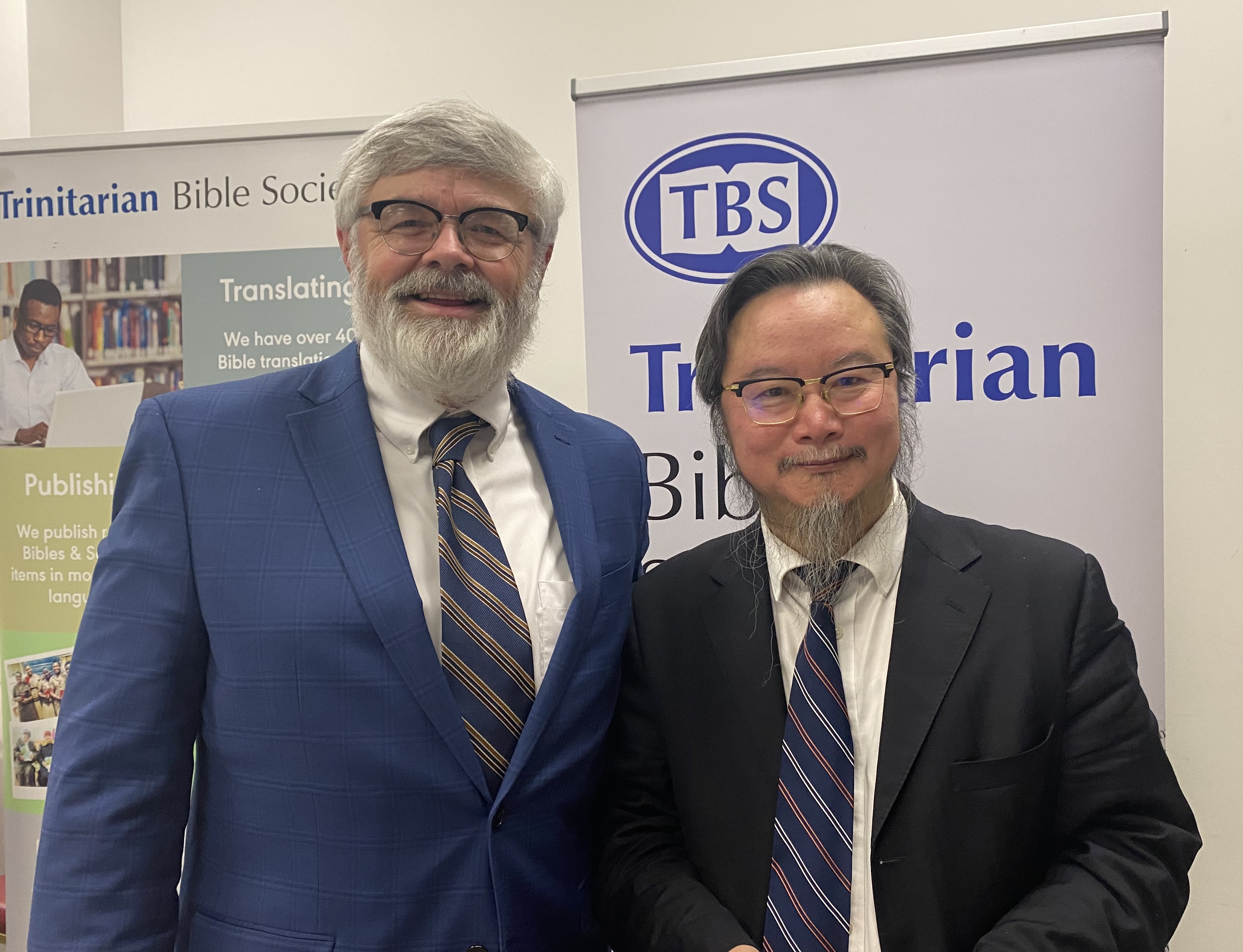
Image: With Pastor Paul Wang, one of the lead translators for the new Trinitarian Bible Society Chinese NT at a Thanksgiving Service in Herndon, Virginia (2.23.23).

Note: Devotion taken from last Sunday afternoon’s sermon, “Revivals or the Ordinary Means of Grace?” Look here for the full manuscript for the message.

The Reformed (Biblical) theological tradition, teaches that God has provided for his people “ordinary means” of grace.

This is taught in our Confession in 14:1. The ordinary means the Lord has provided for the saving of sinners and then increasing and strengthening them in the faith, as noted in Confession 4:1 are:

First: The ministry of the Word. That means the reading of the Word, privately and publicly, and it especially means the preaching and teaching of the Word (see Romans 10:14, 17; 1 Corinthians 1:21-24; 2 Timothy 4:2).

Second: Alongside the ministry of the Word we also have the ordinances or sacraments of baptism (the public confession of one’s faith before men, and the symbolic identification with his life, death, and resurrection by immersing the whole body in water—in obedience to his command) and the Lord’s Supper (taking bread and cup in that spiritual meal instituted by Christ and commanded for perpetual obedience till he comes again) (see Matthew 28:19-20; 1 Corinthians 11:23-26).

Third: To these the confession adds prayer. Paul urged believers to pray without ceasing (1 Thessalonians 5:17). In Acts we have description of the church often meeting to pray, as when the apostle Peter was imprisoned and they gathered in the house of Mary the mother of John (Acts 12).

Fourth: And it mentions “other means appointed by God.” This might include fasting, meditation on the Word, the assemblies of the saints, but these must have scriptural warrant (see, e.g., Matthew 6:16-18; Acts 2:42).

May the Lord continue to use these means to draw men to himself and to increase and strengthen them in “the most holy faith” (Jude 20-21).

Grace and peace, Pastor Jeff Riddle

Thursday, March 05, 2020

WM 161: The Word of God as a Means of Grace


I have posted WM 161: The Word of God as a Means of Grace. Listen here.

In this episode I share my message at the 2018 1689 Conference on "The Word of God as a Means of Grace." The overall conference theme was "The Means of Grace." You can listen to all the conference messages, by various speakers, here.

Blessings, JTR

Friday, September 07, 2018

The Vision (9.7.18): The Word of God as an Ordinary Means of Grace


Image: Charles Hodge (1797-1878)

In light of an invitation to address this topic in a conference next week, I have been giving thought of late to the theme of God’s Word as an ordinary means of grace.

Our Baptist Catechism, based on the Westminster Shorter Catechism, teaches (Q 94):

The Spirit of God makes the reading, but especially the preaching of the Word, an effectual means of convincing and converting sinners, and of building them up in holiness and comfort through faith unto salvation.

This indicates the sense that the Word (its reading and its preaching) is an ordinance of both conversion and edification. This twofold purpose recalls Psalm 19:7 (emphasis added):

The law of the LORD is perfect, converting the soul: the testimony of the LORD is sure, making wise the simple.

In his three volume Systematic Theology, the “Old Princeton” theologian Charles Hodge (1797-1878) devotes an extended section to the Word of God as a means of grace (see Volume III, chapter XX, pp. 466-484). At one point, he reflects on the fact that without the reading and hearing of God’s Word even a regenerate soul would be at a loss:

Even a regenerated soul without any truth before it, would be in blank darkness. It would be in the state of a regenerated infant; or in the state of an unborn infant in relation to the external world; having eyes and ears, but nothing to call its faculties of sight and hearing into exercise.

He concludes:

The Bible, therefore, is essential to the conscious existence of   the divine life in the soul and to all its rational exercises. The Christian can no more live without the Bible, than his body can live without food. The Word of God is milk and strong meat, it is as water to the thirsty, it is honey and the honeycomb (478-479).

If we are to grow in Christ, we need the “intake” of His Word. We need to read the Bible privately and to hear it read corporately. We need also to hear it taught and preached among his people.

May the Lord use his Word as a means of grace to convert souls and to make wise the simple.

Grace and peace, Pastor Jeff Riddle