Showing posts with label Bart Ehrman. Show all posts
Showing posts with label Bart Ehrman. Show all posts
Tuesday, September 27, 2022

Friday, January 21, 2022
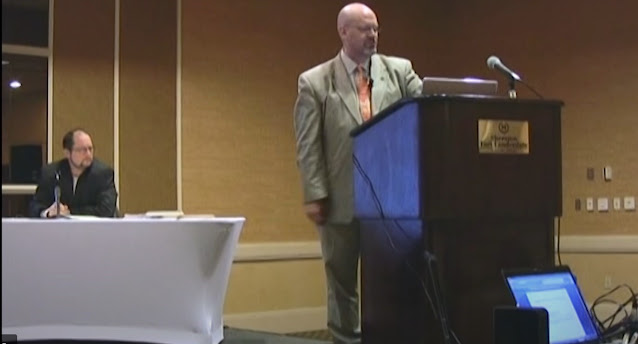
This Day In Church History: The "White-Ehrman" Joint Appearance (January 21, 2009)
I
received this note today from my friend Felix Doulos, a sometimes contributor
to the blog, and thought I would pass it on to my readers:
This
day in Church History: Thirteen years ago today, January 21, 2009, popular internet
apologist James White participated in a joint appearance ("debate") with UNC
professor and NT textual criticism expert Bart Ehrman in Ft. Lauderdale, Florida.
The topic of discussion: “Does the Bible Misquote Jesus?”
Since
taking place, it has become one of the most talked about events in the subculture of evangelical internet apologetics, discussed frequently on internet
programs (like the Dividing Line) and often put forward (by James White) as
a hallmark example of how to do apologetics in the “real world.” Financial terms
of the joint appearance, including how much Ehrman was paid to take part, have
never been publicly disclosed. Whatever the price, it was well worth it.
Though
White has continued to talk often, if not incessantly, of the joint appearance over
the past thirteen years, Ehrman has been more reticent. When he posted videos
of the debate to his
blog in 2014 he wrote: “I
wasn’t sure whether I should post this debate or not. Frankly, it was not a
good experience. I normally do not have an aversion to the people I debate. But
James White is that kind of fundamentalist who gets under my skin.”
There are many ways in which “White-Ehrman Day”
may be commemorated. One might watch the event again on video and ponder the vast
agreement between the two panelists on textual variants in the NT, or one might
look for those lighthearted moments, as when Ehrman playfully corrected White’s pronunciation
of renowned German textual critic “Kurt Aland.”
As we have recently been reminded with respect
to the commemoration of events like January 6, 2021, these kinds
of significant moments deserve to be remembered (and mentioned again, and again).
Felix Doulos
Tuesday, April 28, 2020
WM 164: Has there been a "major shift" in the goal(s) of text criticism?

Note: I have posted WM 164: Has there been a "major shift" in the goal(s) of text criticism? to sermonaudio.com. Listen here.
Here are some notes for this episode:
I was pleased to have Pastor Dane Jöhannsson as a
special guest on this episode.
This episode is a follow up to the discussion in WM 163:Follow Up: Gurry, Parker, Text & Postmodernism.
It examines the question as to whether or not there has been
a “major shift” in the goals of modern academic text criticism in the twenty
first century.
It has three parts:
First, it offers a survey of some of the conversation
with PG that continued in the comments section on my blog on the WM 163 post:
PG doubled down on his contention that the goal of NT
criticism has not undergone a significant postmodern change and that many are still
pursuing the “old goal.” He wrote:
I repeat: many in the guild
continue to think the original text is a legitimate goal for the discipline.
In response I provided a list of quotations in
chronological order for readers to consider for themselves:
Here are a few quotes readers might enjoy reviewing in making
their own judgments:
Wescott and Hort, Introduction to the NT in the Original Greek (1882): “This edition is an attempt to present exactly the words of the NT, so far as they can now be determined from surviving documents.”
Bart Ehrman, “The Text as Window” (1995): “The ultimate goal of textual criticism, in the judgement of most of its practitioners, is to reconstruct the original text of the NT….No historian would deny the desirability of this objective… At the same time, many textual critics have come to recognize that an exclusive concentration on the autographs can prove to be myopic… Much more, however, is left to be done … as we move beyond a narrow concern for the autographs to an interest in the history of their transmission, a history that can serve as a window into the social world of early Christianity.”
DC Parker, The Living Text of the Gospels (1997): “There is no original text. There are just different texts from different stages of production”
DC Parker, The Living Text of the Gospels (1997): “…the concept of a Gospel that is fixed in shape, authoritative, and final as a piece of literature has to be abandoned.”
EJ Epp, “The Multivalence of the Term ‘Original Text’ in NT Textual Criticism” (1999): “Now, however, reality and maturity require that textual criticism face unsettling facts, chief among them that the term ‘original’ has exploded into a complex and highly unmanageable multivalent entity.”
Michael W. Holmes, “Introduction,” The Greek NT SBL Edition (2010): “The standard text is viewed by some of those who use it as a ‘final’ text to be passively accepted rather than a ‘working’ text subject to verification and improvement…. In circumstances such as these, the existence of an alternatively critically edited text … will help remind readers of Greek NT that the text-critical task is not finished… it may also serve to draw attention to a fuller understanding of the goal of NT textual criticism: both identifying the earliest text and also studying all the variant readings for the light they shed on how particular individuals and faith communities adopted, used, and sometimes altered the texts they read, studied, and transmitted.”
DC Parker Textual Scholarship (2012): “…“the modern concept of a single authoritative ‘original’ text … a hopeless anachronism.”
Dirk Jongkind, Ed., “Introduction,” Tyndale House Greek NT (2017): “This edition aims to present in an easily readable format the best approximation to the words written by the NT authors, within the constraints of the documentary evidence that survives.”
Jennifer Knust & Tommy Wasserman, To Cast the First Stone (2019): “Our interpretation therefore begins not with the search for an original or initial text but with the available textual objects, each of which tells its own story, and with the readings of these distinctive objects by the communities that produced and interpreted them.”
Wescott and Hort, Introduction to the NT in the Original Greek (1882): “This edition is an attempt to present exactly the words of the NT, so far as they can now be determined from surviving documents.”
Bart Ehrman, “The Text as Window” (1995): “The ultimate goal of textual criticism, in the judgement of most of its practitioners, is to reconstruct the original text of the NT….No historian would deny the desirability of this objective… At the same time, many textual critics have come to recognize that an exclusive concentration on the autographs can prove to be myopic… Much more, however, is left to be done … as we move beyond a narrow concern for the autographs to an interest in the history of their transmission, a history that can serve as a window into the social world of early Christianity.”
DC Parker, The Living Text of the Gospels (1997): “There is no original text. There are just different texts from different stages of production”
DC Parker, The Living Text of the Gospels (1997): “…the concept of a Gospel that is fixed in shape, authoritative, and final as a piece of literature has to be abandoned.”
EJ Epp, “The Multivalence of the Term ‘Original Text’ in NT Textual Criticism” (1999): “Now, however, reality and maturity require that textual criticism face unsettling facts, chief among them that the term ‘original’ has exploded into a complex and highly unmanageable multivalent entity.”
Michael W. Holmes, “Introduction,” The Greek NT SBL Edition (2010): “The standard text is viewed by some of those who use it as a ‘final’ text to be passively accepted rather than a ‘working’ text subject to verification and improvement…. In circumstances such as these, the existence of an alternatively critically edited text … will help remind readers of Greek NT that the text-critical task is not finished… it may also serve to draw attention to a fuller understanding of the goal of NT textual criticism: both identifying the earliest text and also studying all the variant readings for the light they shed on how particular individuals and faith communities adopted, used, and sometimes altered the texts they read, studied, and transmitted.”
DC Parker Textual Scholarship (2012): “…“the modern concept of a single authoritative ‘original’ text … a hopeless anachronism.”
Dirk Jongkind, Ed., “Introduction,” Tyndale House Greek NT (2017): “This edition aims to present in an easily readable format the best approximation to the words written by the NT authors, within the constraints of the documentary evidence that survives.”
Jennifer Knust & Tommy Wasserman, To Cast the First Stone (2019): “Our interpretation therefore begins not with the search for an original or initial text but with the available textual objects, each of which tells its own story, and with the readings of these distinctive objects by the communities that produced and interpreted them.”
Second, we discussed two other reactions to WM 163: a
private email rebuke and TW’s response:
First, we discussed a couple of private emails
I got from someone “in the guild”
rebuking me as an “outsider” and challenging someone who is “on the inside.”
rebuking me as an “outsider” and challenging someone who is “on the inside.”
Second, we noted Tommy Wasserman’s recent response
to WM 163 in a post on the Evangelical Textual Criticism blog.
I plan to do a separate WM soon that will be
devoted entirely to responding to TW.
Third, I shared a brief clip from a recent podcast in which
Maurice Robinson, noted Byzantine Priority Advocate and Research Professor at
SEBTS, addresses the current state of academic NT text criticism:
His
comments were taken from episode 3 of a podcast called Hoi Polloi hosted by Pastor Abidan Paul Sha (22:27-28:01).
At
one point Robinson quips, “there are a lot of strange things happening in NT
textual criticism.”
Dr.
Robinson’s comments seem to affirm my contention that there has, in fact, been
a major postmodern shift in the goal(s) of contemporary academic text
criticism.
Conclusion:
PG
seems to be saying, “But there are some of us (evangelicals) in 'the guild' and even some 'gatekeepers' of the scholarly academic text who are seeking the 'original' text." But that’s
not the language they use. They want the “initial text.” They do not mean by
“initial text” what Wescott and Hort meant by “original text.” The most, for
example, that Jongkind can say of the THGNT is that it is “the best approximation to the words
written by the NT authors, within the constraints of the documentary evidence
that survives.” Our concern
is that this type of approach ultimately undermines any confidence in the ability to define with confidence (and accuracy) what the Word
of God is.
Saturday, October 25, 2014
Word Magazine # 29: James White, Luke 23:34, the PA as a "Floating Tradition," and Muslim Apologetics
I recorded and posted yet another new Word Magazine this morning (that makes two WMs, back to back, in two days!). Word Magazine # 29 comes in response to several people who contacted me over the last week asking if I'd do a response to a Muslim apologetic video which featured clips from apologist James White and Bart Ehrman. As a supplement to this WM episode I have also added two blog posts that I refer to in the podcast:
You can also view and listen to the video posted by "Muslimbychoice" which is reviewed in the podcast here:
Saturday, April 12, 2014
New Word Magazine: Review: Bart Ehrman on How Jesus Became God

I just uploaded a new Word Magazine which I recorded on Friday, reviewing the NPR Fresh Air interview with Bart Ehrman on his new book, How Jesus Became God.
JTR
Tuesday, August 20, 2013
New Word Magazine (8.20.13): The White-Ehrman Debate and the Text of Scripture
I posted a new Word Magazine today that offers a review of part of the rebuttal segment from apologist James White's debate with Bart Ehrman on the the reliability of the NT text ("Does the Bible Misquote Jesus?"). Though I'm sympathetic with White's efforts to affirm the reliability of the NT, I argue that he and Ehrman are actually more alike than different in that they both embrace the modern critical text rather than the traditional text. You can listen to the entire White-Ehrman debate here on youtube.com. At the close, I shared this quote from Theodore Letis's The Ecclesiastical Text:
"Science never has come to the rescue of the Faith. Criticism certainly has its own indispensable place in the Academy, but to view it as an auxiliary support in defense of
Christianity’s truth claims is to give it expectations outwith its intended
design. It would be like asking a
physician performing a post-mortem examination why he has spent all his time
dissecting the corpse rather than resuscitating it. Resuscitation is not the goal of autopsy" (p. 73).
JTR
Tuesday, November 27, 2012
Thoughts on the historicity of Jesus
I’m still doing reading in the field of “the quest of the historical
Jesus” and just finished reviewing one of the texts I’ll use for the class, The Historical Jesus: Five Views (IVP Academic, 2009), edited
by James K. Beilby and Paul Rhodes Eddy of Bethel University. The five views
range from Robert M. Price (denial of the very historical existence of Jesus)
to John Dominic Crossan (Jesus as a non-violent anti-imperialist) to Luke
Timothy Johnson (what matters is not the historical Jesus but the Jesus of
faith constructed by the Evangelists) to James D. G. Dunn (what matters is not the
historical Jesus but the Jesus remembered in the church’s “living tradition”)
to Darrell L. Bock (evangelical view which upholds continuity between the
historical Jesus and the presentation of him in the canonical Gospels).
As for Robert Price’s revival of the “Jesus Myth” theory,
here is Albert Schweitzer’s assessment of this view as it was presented in his
day:
It is clear, then, as a matter of
fact, from the writings of those that dispute the historicity of Jesus that the
hypothesis of His existence is a thousand times easier to prove than that of
His nonexistence. That does not mean
that the hopeless undertaking is being abandoned. Again and again books appear about the
nonexistence of Jesus and find credulous readers, although they contain nothing
new or going beyond Robertson, Smith, Drews, and the other classics of this
literature, but have to be content with giving out as new what has already been
said (Out of My Life and Thought, p.
129).
Even arch-skeptic Bart Ehrman in his most recent book, Did Jesus Exist? The Historical Argument for Jesus of Nazareth
(HarperOne, 2012) vigorously affirms the historicity of Jesus of Nazareth, even
as he rejects with equal vigor orthodox confessional claims about him. Ehrman’s point seems to be that you might not
believe in Jesus, but you ought at least believe that he did exist as a
historical figure.
Subscribe to:
Posts (Atom)